
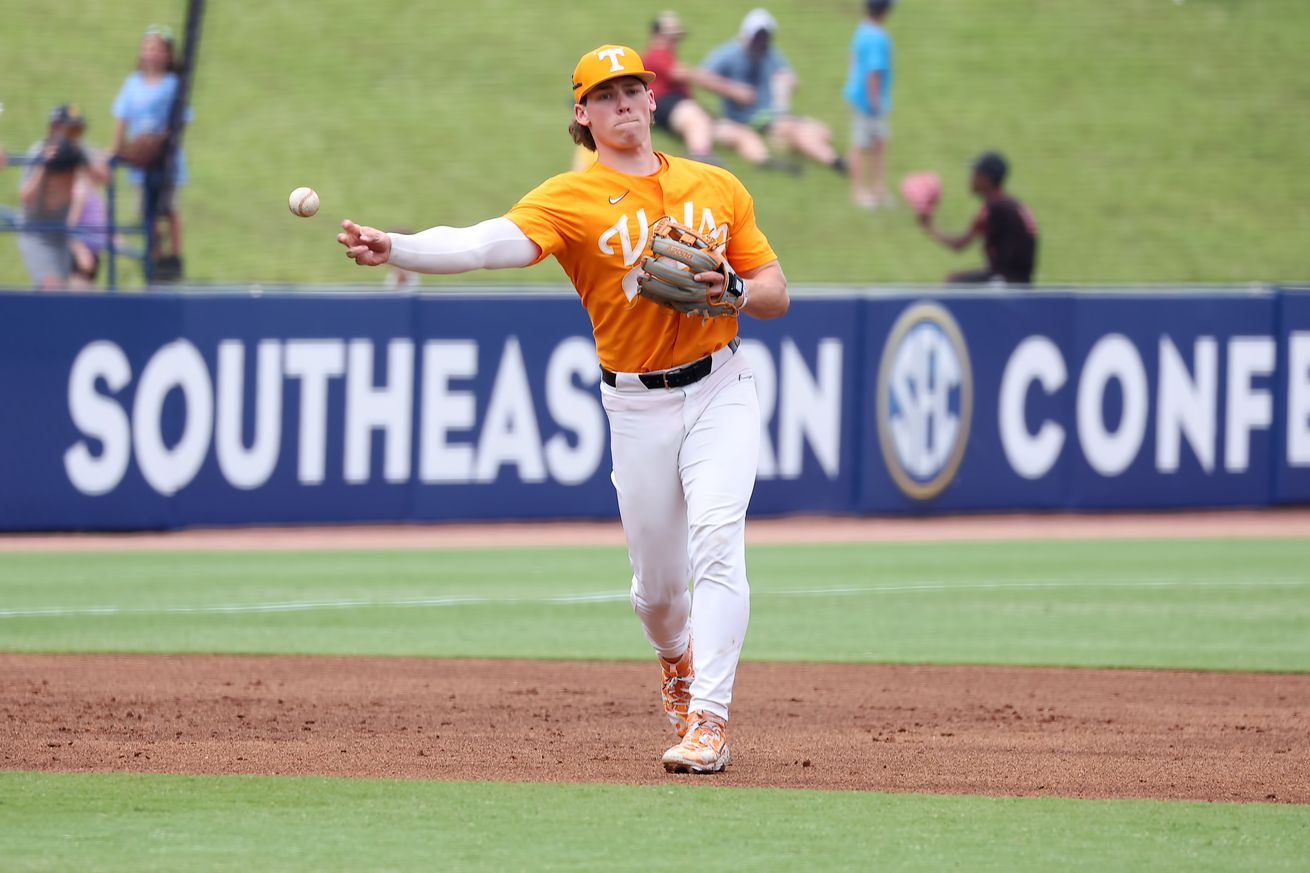
Another early-round draftee for Tennessee
Former Clemson transfer and Vols’ third baseman Billy Amick became the second Tennessee baseball player taken in the 2024 MLB Draft when the Minnesota Twins snagged him with the 60th overall pick.
Amick’s only season with Tennessee a bit of an up-and-down affair, as he started the season leading the team in home runs then missed seven or eight games with an appendix injury. He still started in all 65 games he played in and finished tied for third on the team in home runs with 23 and third in RBIs with 65.
The power was evident even with Amick’s outs, given the relatively consistent MLB-level exit velocities and distances. He slashed .305/.387/.639 and ranked fifth, sixth and fifth respectively in each category on the team. He finished sixth on the team with 29 walks but fourth on the team in strikeouts with 53.
Regardless, when Amick gets ahold of one — he’s got easy home-run power.
Dang Billy, that ball had a family…
https://t.co/slhIZcBQO2 (ESPN2)
#GBO // #OTH // #BeatUE pic.twitter.com/cdMn7XOgNu
— Tennessee Baseball (@Vol_Baseball) June 7, 2024
His bat speed and strength definitely translate, but he’ll have to be a more selective hitter to reach his potential at the MLB level. His approach at the plate gives him high barrel rates and tough balls to play in the field due to the exit velos, but his his propensity to chase balls out of the zone make it tougher for him to work counts or draw walks, evidenced by his slash numbers.
He didn’t play often his freshman season at Clemson and didn’t start for the Tigers until well into his sophomore year. He also played exclusively at DH or first, which was part of the reason he transferred to Tennessee. During that second year at Clemson, Amick his above .400 with 13 HRs and 63 RBIs.
The Vols let him play third, but Blake Burke’s defense at first helped deal with Amick’s average arm and less-than-great lateral speed and quickness. He had eight errors in 2024 (third on the team) with a .926 fielding percentage, which was last on the team taking into account a reasonable amount of games played.
If he can cut down on the swings-and-misses, he’s got much more value to a team at third than he does at first, which would be the most likely place to move him given his power at the plate. When his bat makes him tough to not play, the defense at third will have to be at least average to stick at the hot corner in the Majors.